uv dtf sticker business kenya: Checks for Customer-Supplied Items
Before accepting customer-supplied items for UV DTF branding, agree on surface tests, artwork approval, application responsibility and handover checks.
Accept the item before accepting the order
If you are researching “uv dtf sticker business kenya”, think beyond the printer and finished sticker. Customer-supplied items introduce another decision: whether you can confidently accept the particular surface, shape and condition presented for branding.
For a Kenyan print shop, a clear intake process helps prevent disagreements about placement, appearance and responsibility. Rather than expanding your service menu immediately, establish how you will assess unfamiliar items and approve work before production begins.
Your uv dtf sticker business kenya intake checklist
Start with the actual item, not just a photograph or a description such as “plastic bottle”. Similar-looking objects can have different coatings, textures or surface treatments. A successful application on one item does not establish suitability for every item in the batch.
Record the following when receiving customer property:
- Item description, quantity and visible condition.
- Material and coating information, where known.
- Proposed branding area and any curves, seams or recesses.
- Intended use, including handling, washing and exposure.
- Whether the customer can provide a sample for testing.
- Who will apply the transfer: your staff or the customer.
Photograph existing scratches or damage with the customer's agreement. Keep the intake record alongside the artwork and quotation so that staff can refer to the same instructions.
Separate transfer-only and applied orders
For transfer-only work, agree on the design size, quantity and how the customer will receive application guidance. Make clear that an approved printed transfer is not the same as an approved application on their item.
For applied orders, include surface preparation, positioning, inspection and handling in the job plan. These tasks require attention even when the artwork is small.
Use a sample to define what you can offer
Request a representative sample before accepting an unfamiliar surface or finish. Explain that testing may mark or alter the sample, and obtain permission before proceeding.
Clean and prepare the test area according to the relevant material instructions. Avoid choosing a cleaning chemical simply because it is already used elsewhere in the workshop; it may affect the item's coating.
Assess the sample for:
- Complete transfer of the design, including small details.
- Adhesion at edges and around the item's contours.
- Visible distortion, trapped air or alignment problems.
- Appearance against the item's actual colour and finish.
Follow supplier guidance on application and assessment timing. Do not turn a successful initial application into an unsupported claim that the branding is dishwasher-safe, scratch-proof or suitable for every outdoor condition.
Where food or drink containers are involved, do not assume suitability for food-contact areas. Keep proposed placement away from those areas unless suitability has been established.
Approve artwork and placement separately
An artwork proof confirms content, spelling and layout. A placement proof confirms where that artwork sits on the object. Obtain both approvals before processing the full order.
Show the design at its intended size and identify its position relative to a clear reference, such as a seam or lid. Check whether curves make text difficult to read or cause the design to cross an unsuitable area.
Record the approved file version. If the customer changes the logo, dimensions or item after approval, revisit the relevant checks rather than treating the change as automatically covered.
Match equipment and consumables to the workflow
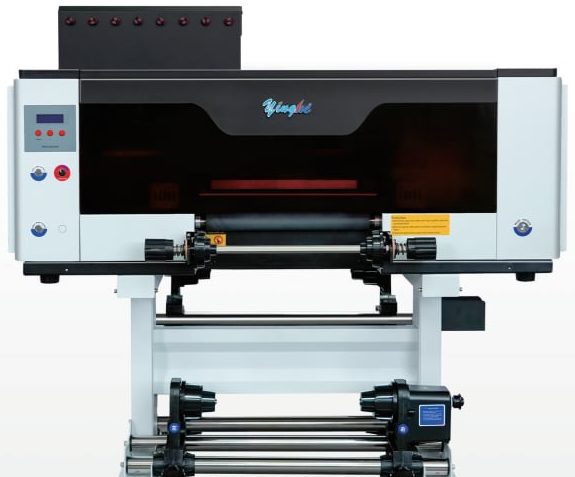
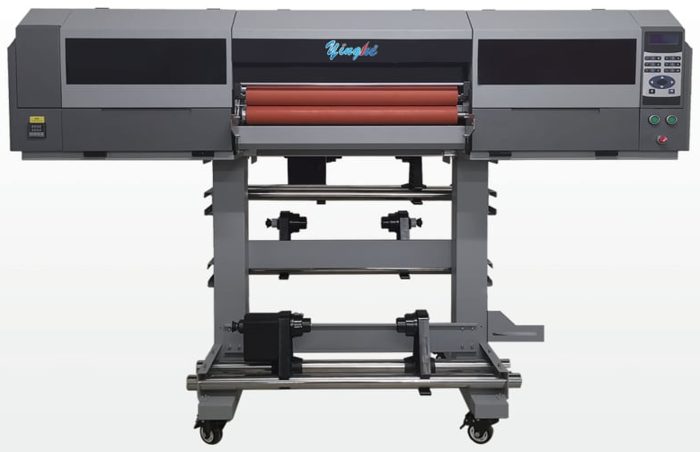
SEAFAR International lists the A3 UV DTF printer at KES 807,500, with Epson XP600 x3, and the YH-600 UV DTF printer at KES 1,092,500, with Epson I3200-U1 x3.
These catalogue details are a starting point for an equipment discussion, not proof of suitability for every customer item. Ask SEAFAR to confirm the proposed configuration, compatible consumables and workflow requirements before purchasing.
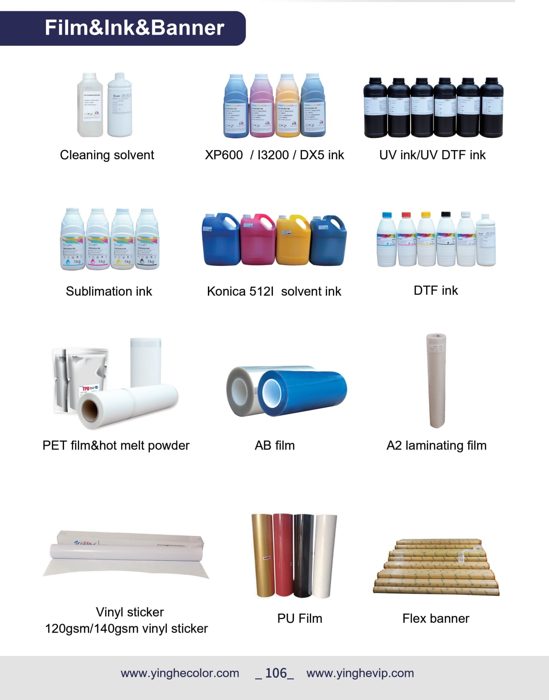
The film, ink and banner range includes UV DTF ink. Prices are confirmed on WhatsApp. Request confirmation of compatibility rather than assuming that garment DTF materials and UV DTF materials are interchangeable.
For help organising the process, Production Workflow & Technical Consulting provides advice on getting more consistent output from equipment and materials.
Put acceptance conditions in the quotation
Build your quotation around the complete job, not only the printed area. Consider artwork preparation, sample work, materials, application labour, inspection and packing.
State how unsuitable items, existing damage, artwork changes and failed applications will be handled. Agree these terms before work starts, especially where customer property is difficult to replace.
At handover, compare finished items with the approved sample, check quantities and provide care guidance supported by the material instructions. Keep the job record for repeat orders, while checking any new batch of items again.
Next steps
Planning to accept customer-supplied items? Contact SEAFAR International on WhatsApp +254 795 463 928 or email ENQUIRIES@SINTL.CO.KE to discuss UV DTF equipment, consumable compatibility and workflow support.