Large format printers in Kenya: Buy or Keep Outsourcing?
Should your print shop bring signage production in-house? Compare repeat orders, operating costs and staff capacity before moving away from outsourcing.
Searching for Large format printers in Kenya often starts with a machine price, but the bigger question is whether your shop should bring production in-house. If you currently outsource banners, signage or vinyl graphics, ownership changes more than where printing happens: your team also takes responsibility for materials, maintenance, quality control and scheduling.
For print businesses in Nairobi and across East Africa, the useful comparison is not simply printer cost versus outsourcing invoices. It is the cost and practicality of delivering finished, approved work through each route.
Large format printers in Kenya: start with your outsourcing records
Review your completed orders before choosing equipment. Separate regular work from occasional requests, and record what each job needed beyond printing.
Build a simple job log covering:
- The material and finished dimensions requested.
- Whether the work repeats or was a one-off order.
- The amount paid for outsourced printing and transport.
- Any trimming, lamination, cutting or other finishing required.
- Time spent collecting work, checking quality and arranging corrections.
- The customer's approval process and delivery expectations.
This helps distinguish a recurring production requirement from a temporary rush. A busy period alone is not enough to establish how consistently a printer would be used.
Separate printing problems from artwork problems
Identify why outsourced jobs become difficult. Collection delays and limited scheduling control are different from missing fonts, unsuitable images or late customer approvals.
Buying a printer may change production scheduling, but it will not automatically fix artwork preparation. Keep file checks and customer sign-off in your comparison so that ownership is not credited with solving unrelated problems.
Compare the cost of finished work
An outsourcing invoice and an ink-and-media estimate do not cover the same things. Your in-house estimate needs to include the work required to turn a file into something ready for the customer.
Allow for:
- Compatible media, ink and cleaning materials.
- Setup prints, trimming waste and possible reprints.
- Operator time for preparation, printing and checks.
- Electricity, workspace and routine machine care.
- Finishing materials and labour.
- Maintenance and replacement parts.
Keep equipment purchase costs separate from recurring production expenses. Then consider both when deciding whether your expected workload can support ownership. Prices for items without a listed catalogue price are confirmed on WhatsApp.
You can compare outsourced cost per completed job with estimated in-house cost per completed job. Use the same artwork, material, finishing requirements and acceptable quality level on both sides. Do not treat every outsourced payment as money that ownership would eliminate.
Use catalogue machines as budget reference points
SEAFAR International lists options that can help you begin a purchase comparison without assuming that every print shop needs the same configuration.
YH-1800A with Epson XP600
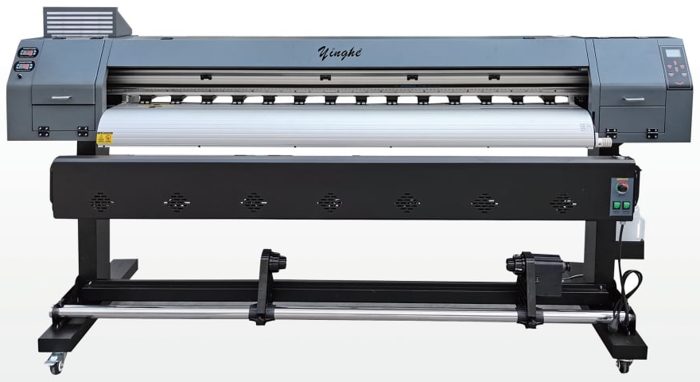
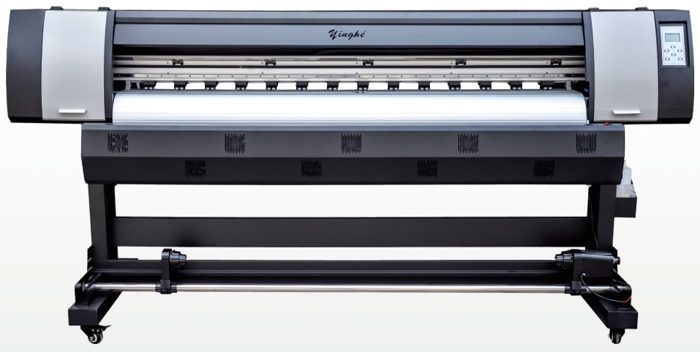
The YH-1800A large format printer is listed at KES 335,000. Its catalogue description specifies a 1.85m eco-solvent printer with one Epson XP600 printhead.
Use this as a purchase-budget reference, then confirm its suitability for your intended materials and production requirements. The purchase price alone does not establish your cost per finished job.
YINGHE 1.8m with Epson i3200
The YINGHE 1.8m eco-solvent printer with Epson i3200 is listed at KES 569,999. Its description identifies commercial signage, banner production and vinyl graphics as intended applications.
Compare the proposed configuration against your recurring work. Do not assume that the printhead name alone tells you the running cost or finished-job turnaround. Ask what your specific workflow requires before choosing between the machines.
Check whether your team can own the process
Outsourcing transfers much of the machine operation to another business. Bringing production in-house means assigning responsibility for daily checks, material handling, job settings and maintenance records.
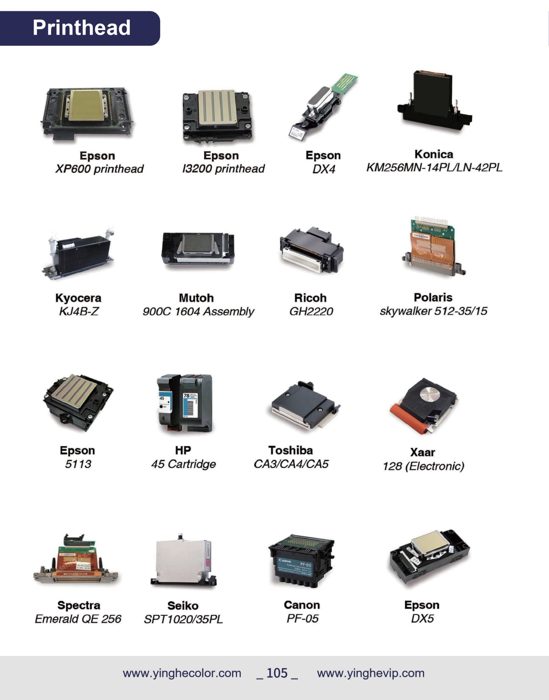
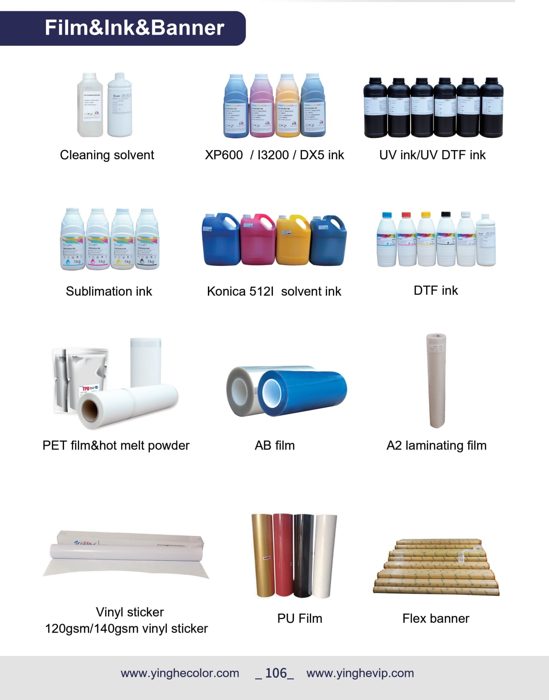
SEAFAR lists printheads, including Epson XP600 and I3200, and ink and cleaning consumables. Confirm compatibility with the exact machine configuration before purchasing replacements or changing consumables. Prices are confirmed on WhatsApp.
If operator readiness is a concern, Machine Operation & Technical Training covers running, caring for and troubleshooting equipment. Include training needs in the decision rather than treating them as an afterthought.
Consider a mixed approach
Buying a printer does not require bringing every order in-house. You can assess ownership for repeat work while continuing to outsource jobs that need a different process or finishing capability.
If demand is irregular, continued outsourcing may remain practical. If repeat work is established, Printing Business Setup & Production Planning can help you plan an expansion around what your customers buy.
Next steps
Share your recurring job types, outsourcing costs and staffing plans with SEAFAR International. WhatsApp +254 795 463 928 or email ENQUIRIES@SINTL.CO.KE to discuss suitable machines and confirm prices.