laminating machine Kenya: A Pre-Purchase Finish Checklist
Before buying a laminator, check how your actual prints, films and finishing tasks work together. Use this practical checklist to assess finish quality, handling and operator requirements.
Searching for “laminating machine Kenya” is a useful starting point, but a product name alone cannot tell you whether a machine suits your finishing work. For print shops in Nairobi and across East Africa, the practical question is whether the equipment can handle the intended print-and-film combination consistently, with a workflow staff can manage.
Rather than comparing format labels alone, build your buying decision around sample quality, material compatibility and operator requirements. This checklist helps you prepare a useful enquiry and identify what needs confirming before purchase.
Your laminating machine Kenya sample checklist
Start with representative work from your shop, not only an attractive image prepared for a demonstration. Different printed surfaces can reveal different finishing problems.
Prepare samples that include:
- Solid dark areas, where trapped air and surface marks may be easier to spot.
- Fine text and detailed graphics, to check that finishing preserves clarity.
- Light backgrounds, where dust or contamination may stand out.
- The media and finished dimensions you regularly handle.
- A job that needs trimming or another finishing step after lamination.
Record the print process, media and proposed laminate for each sample. Ask whether a trial with those materials can be arranged. Where testing is not possible, request confirmation of compatibility rather than assuming that all laminating films behave alike.
Confirm the material system before judging the machine
Lamination depends on more than the rollers. The print surface, adhesive, film and operating method must work together.
Match the film to the process
Heat-activated and pressure-sensitive laminating films have different processing requirements. Confirm which method the proposed machine supports and whether it suits your print media. Do not use a hot/cold label as a substitute for checking the intended film and operating instructions.
Also describe the finished item's use. Handling, folding and exposure conditions can affect the suitability of a laminate. A neat sample does not, by itself, establish outdoor durability or suitability for every application.
Prepare prints properly
Prints should be clean and ready for finishing according to the ink and media guidance. Solvent-printed work may require time for residual solvent to escape before lamination. Avoid setting a universal waiting period: follow the relevant material instructions.
Keep samples flat and protected from dust. Otherwise, preparation faults can be mistaken for machine faults.
Inspect the finish, not just the first impression
View the laminated sample under angled light as well as straight on. Check the middle, edges and areas where the print enters and leaves the rollers.
Look for:
- Bubbles or silvering: trapped air can appear as bubbles or a fine silvery texture.
- Wrinkles: check whether the film and print remain flat throughout feeding.
- Curl: assess whether the finished piece lies suitably flat for its next operation.
- Surface marks: inspect for dust, scratches or repeated roller marks.
- Uneven adhesion: check bonding across the sample, using the film supplier's assessment guidance.
These symptoms do not automatically mean the laminator is unsuitable. Contamination, alignment, material choice and operating settings can all contribute. Ask the operator to explain any adjustments, and change one factor at a time when investigating a fault.
Keep an approved sample and a record of its materials and settings as a production reference.
Use catalogue models as enquiry starting points
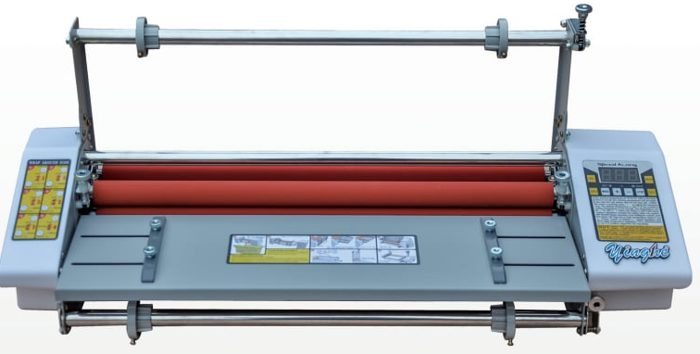
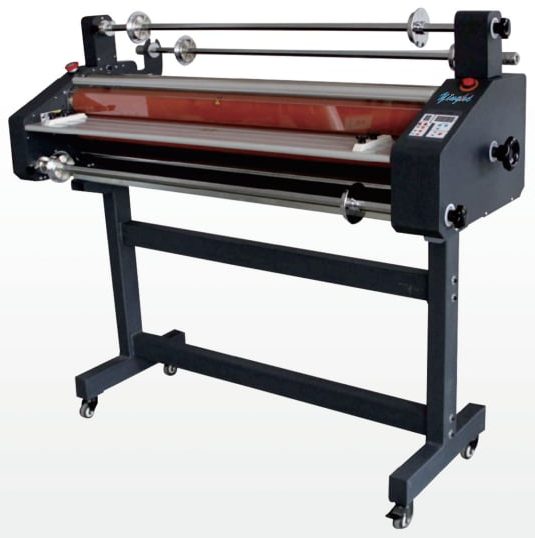
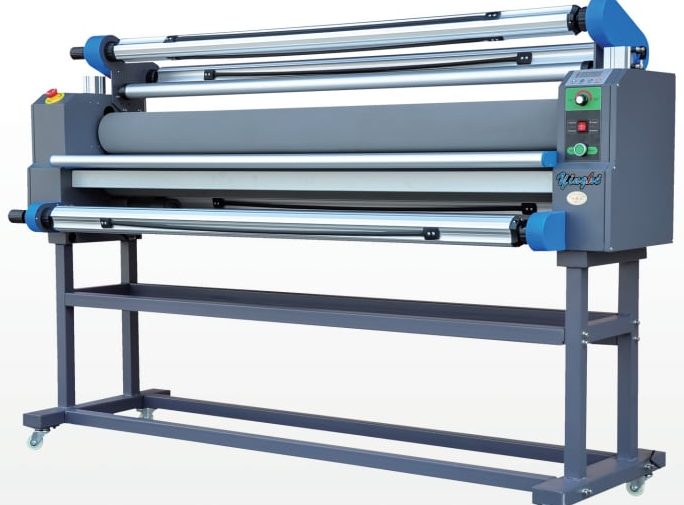
SEAFAR International lists the A2 laminating machine YH-A2, the Hot/Cold laminating machine and the 1680 laminating machine YH-1680A.
For the YH-A2, describe your sheet sizes and intended finishing method. For the Hot/Cold model, explain which films and print materials you want to process. For the YH-1680A, provide your required working width rather than treating the model number as a confirmed usable-width specification.
For each option, ask about compatible material formats, thickness limits, controls, feeding arrangements and workspace requirements. Prices are confirmed on WhatsApp. Compare the confirmed requirements against your actual jobs before selecting a model.
Check handling and staff readiness
A good finish should remain practical when the sample becomes a customer order. Consider space for incoming prints, clean film storage, supported feeding and finished work awaiting trimming.
Ask who will load materials, check alignment and approve the first finished piece. Cleaning and jam-clearing must follow the machine instructions, with appropriate precautions around rollers and heated components.
SEAFAR's Machine Operation & Technical Training covers running, caring for and troubleshooting equipment. Production Workflow & Technical Consulting offers advice on achieving more consistent output from equipment and materials.
Next steps
Send your typical print sizes, media, proposed laminate and sample-quality concerns to SEAFAR International. WhatsApp +254 795 463 928 or email ENQUIRY@SINTL.CO.KE to discuss suitable equipment and confirm prices.