How to Choose a Heat Press Machine in Kenya
Buying a heat press? Compare garment, cap and mug applications, check transfer compatibility and plan the equipment, training and materials your shop needs.
Start with the products you want to brand
A heat press should suit the work your customers order, not simply the lowest advertised price. Before choosing a machine for your Kenyan print shop, identify whether you will mainly decorate garments, caps or mugs, and how you will prepare the transfers.
The press applies heat and pressure; it does not create the artwork or print the transfer. Your buying decision therefore needs to cover the whole workflow, from design preparation to checking the finished item.
Write down your likely products, artwork dimensions, garment materials and order quantities. These details make it easier to compare machines without paying for capabilities you have not established a need for.
Match the press to the shape of the product
Flatbed presses for garment work
The Yinghe 38 × 38cm Flatbed Heat Press Machine is listed at KES 29,999. Its catalogue description identifies garment printing, DTF transfers and heat-transfer vinyl as intended applications.
Use the stated dimensions as a starting point, then ask whether your largest intended design fits the usable pressing area. Also consider how you will position the garment: seams, pockets and zips can interfere with even contact.
Do not choose by a paper-size label alone. Bring artwork measurements and a sample garment when discussing suitability.
Dedicated presses for caps and mugs
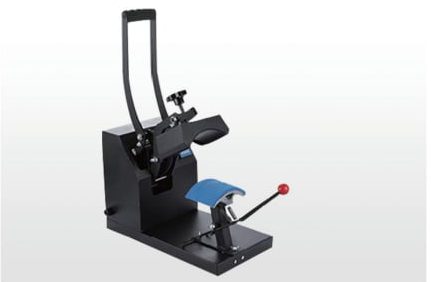
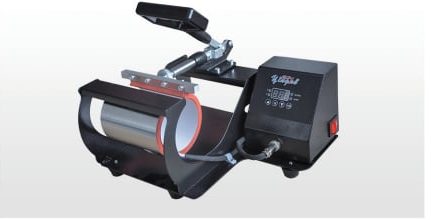
Curved products need equipment suited to their shape. A flat garment press should not be assumed to handle mugs or structured caps.
Two catalogue options to discuss are:
- Cap press machine YHT-814, listed at KES 25,650.
- Mug press machine YHT-110Z, listed at KES 18,050.
Before ordering, confirm which cap shapes or mug dimensions the selected machine accommodates. Ask about the heating attachment and compatible blanks rather than assuming that every item will fit.
If garments are your main business, assess that workflow first. Add specialist equipment when it matches the products you intend to sell.
Decide how you will prepare transfers
The transfer method affects both your equipment requirements and your material choices.
- DTF transfers: decide whether you will source prepared transfers or produce them in-house. Owning a heat press does not mean you also need to own a DTF printer immediately.
- Heat-transfer vinyl: plan for artwork cutting, weeding and placement before pressing. Confirm that the chosen film suits the fabric and intended finish.
- Sublimation: check that the substrate is suitable for sublimation and that the selected press can accommodate it. Not every garment or coated product is interchangeable.
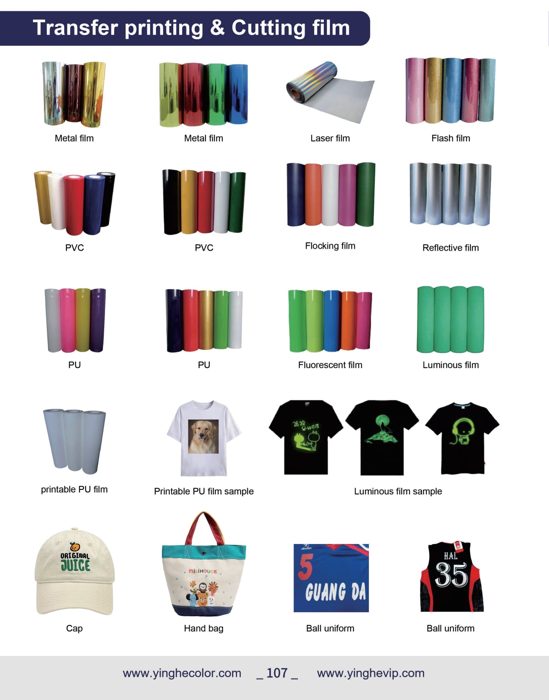
SEAFAR lists transfer printing and cutting film, including PU, flocking, reflective and printable PU film. These materials have different preparation and application requirements. Confirm the exact film, compatible cutting or printing process, and application instructions before buying. Prices are confirmed on WhatsApp.
Check controls, workspace and operator handling
Time, temperature and pressure work together. A digital display is useful, but successful application still depends on the correct settings, suitable materials and consistent positioning.
Before purchasing, ask:
- How are temperature, dwell time and pressure set on this model?
- What electrical supply and workspace does it require?
- Is there enough clearance to load garments and open the press safely?
- Which accessories are included, and which need separate confirmation?
- Can the proposed setup be assessed using your actual transfer and blank?
Follow the transfer supplier’s instructions rather than applying one setting to every job. Record settings after a successful test and check adhesion and appearance before processing a customer’s full order.
Allow space for preparing blanks, positioning transfers and cooling finished work. Keep hot surfaces clear and follow the machine’s operating instructions.
Plan for maintenance and training
Include operator training and maintenance in your buying decision. Keep pressing surfaces clean using approved methods, inspect equipment before use and isolate the power before maintenance. Electrical faults should be assessed by a qualified technician.
The Yinghe Digital Heat Press Temperature & Timer Controller is listed at KES 11,999. It has an LED display and four-button control panel, and is intended for compatible heat press machines. It is a controller, not a complete press; compatibility must be confirmed before replacement.
SEAFAR’s Machine Operation & Technical Training covers running, caring for and troubleshooting equipment. For a new shop or expansion, Printing Business Setup & Production Planning can help align equipment choices with what customers buy.
Next steps
Share your products, largest artwork dimensions, transfer method and expected order quantities. WhatsApp +254 795 463 928 or email ENQUIRY@SINTL.CO.KE to discuss a suitable heat press setup and confirm your requirements.