embroidery machine Kenya: A Stitch-Out Buying Checklist
Before buying an embroidery machine, assess your own artwork, garment samples and production workflow. Use this practical stitch-out checklist to guide your enquiry.
Searching for an embroidery machine Kenya is only the beginning of a buying decision. For a garment-branding business, the useful question is whether a proposed machine and workflow suit the jobs customers actually bring. A stitch-out—a sewn sample of your design—helps you assess the finished result rather than relying on a machine name or an attractive display sample.
This checklist focuses on artwork, fabric handling, sample inspection and operator readiness, giving Kenyan and East African buyers a practical way to prepare an enquiry.
embroidery machine Kenya: Start with a real job brief
Before discussing equipment, describe the work you want to produce. A small chest logo on a polo shirt presents different handling challenges from a large design on a heavier garment.
Prepare a brief that covers:
- The garments and fabrics you expect to brand.
- Typical design positions and approximate finished dimensions.
- Whether orders repeat the same logo or involve frequent changes.
- The detail customers expect, including lettering and fine outlines.
- Who will prepare artwork, operate the machine and inspect finished work.
Use this brief when discussing a machine. Ask for confirmation of suitability for your intended garments and design sizes rather than assuming every configuration handles them equally.
Prepare artwork that reveals practical limits
Embroidery needs a stitch file, not simply a picture of a logo. Digitising translates artwork into stitch instructions, and those choices affect the finished appearance.
Choose a representative design
Bring a logo that reflects your normal work. Useful test features include lettering, filled areas, curves and outlines that must align. An unusually simple demonstration design may not reveal the challenges in your customers’ artwork.
Ask who will prepare the embroidery file, which file formats the proposed machine accepts and whether artwork preparation is included in the quotation. Treat these as questions to confirm, not assumed features.
Agree on the finished size
Judge artwork at the size it will appear on the garment. Fine details that look clear on a screen may need simplifying for embroidery. Approve any changes before assessing the sample so that everyone is judging the same design.
Assess the fabric and hooping process
A sample sewn on unrelated fabric offers limited guidance. Where a demonstration or sample assessment is available, request material similar to your intended garments.
Hooping should secure the fabric without distorting it. The stabiliser supports the material during stitching; its selection should reflect the fabric and design. Stretchy, lightweight and textured fabrics may require different preparation.
Watch the preparation process as well as the stitching:
- Is the design position marked consistently?
- Is the garment held securely without excessive stretching?
- Can the operator keep unwanted fabric clear of the stitching area?
- Is the backing appropriate for the garment and intended finish?
For caps or awkward garment positions, ask which attachments and setup are required. Do not assume they are included or compatible without confirmation.
Inspect the stitch-out after removing the hoop
A design can appear acceptable while the fabric remains tightly held. Inspect it again after unhooping and finishing.
Look for:
- Legible lettering: characters should remain recognisable at the agreed size.
- Aligned outlines: borders should meet the intended areas cleanly.
- Even coverage: check for unintended gaps or excessive thread build-up.
- Fabric stability: look for puckering, distortion or visible damage.
- Clean finishing: inspect loose threads and the reverse of the garment.
Poor results do not automatically identify a machine fault. Digitising, thread tension, needle condition, stabiliser choice and hooping can all affect embroidery. Ask the operator to explain any adjustments, and record the setup used for an acceptable sample.
Compare catalogue options against your brief
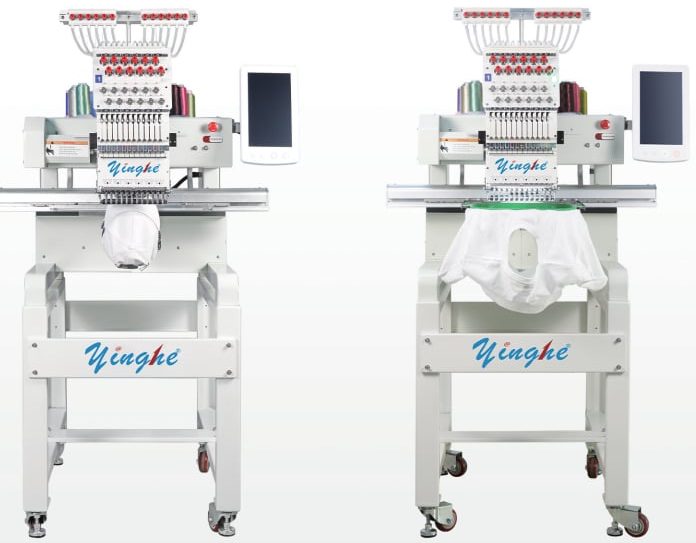
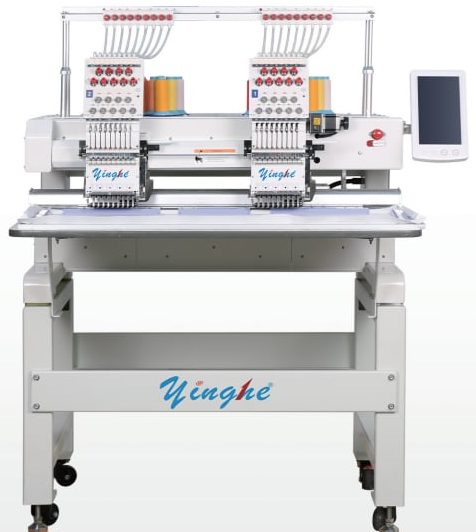
SEAFAR International lists the Single-head embroidery machine YH-901/1201/1501 CS and CL at KES 503,500 and the Double-head embroidery machine YH-902W / 1202W / 1502W at KES 779,000.
Use these listings as starting points for an enquiry. Confirm the exact variant, embroidery area, supplied accessories, software requirements and installation scope before ordering. Avoid estimating finished-job output from head count alone: preparation, garment changes and finishing also take time.
Include operator readiness in the decision
Ask how your team will learn threading, hooping, routine care and basic troubleshooting. SEAFAR’s Machine Operation & Technical Training provides hands-on training in running, caring for and troubleshooting equipment.
Printing Machine Installation & Commissioning covers setup, configuration, first checks and handover. Confirm the service scope and prices on WhatsApp when planning your purchase.
Next steps
Share your logo, garment types and production brief with SEAFAR International. WhatsApp +254 795 463 928 or email ENQUIRIES@SINTL.CO.KE to discuss embroidery machine options and confirm requirements.