dtf printing business profit in kenya: Price Jobs for a Margin
Assess DTF profitability through job costing, contribution margins and break-even planning—not sales totals alone. Build quotes around your actual production costs.
For anyone researching dtf printing business profit in kenya, the useful question is not simply how much a printed shirt sells for. It is how much each completed order contributes after materials, production time and other costs. A busy shop can still struggle if its quotations overlook artwork preparation, spoiled garments or unpaid revisions.
This guide focuses on pricing and reviewing orders, rather than building another machine-purchase budget. Use your own supplier quotes and production records: there is no universal profit figure for a DTF business.
Calculate dtf printing business profit in kenya by job
Start with a job sheet that records what the customer ordered and what production actually consumed. Separate transfer-only work from finished-garment orders because their costs and responsibilities differ.
For every quotation, record:
- Garment quantity, type and who supplies it.
- Print dimensions and placement, including additional print positions.
- Artwork preparation and approval requirements.
- Film, ink and powder consumption.
- Printing, pressing, inspection and packing time.
- Packaging, delivery and payment charges where applicable.
- Test pieces, rejected transfers and reprints.
Record actual costs after completing the order. Comparing estimates with results shows whether your pricing assumptions hold up in production.
Separate contribution from profit
Use this basic calculation:
Job contribution = job revenue − variable job costs.
Variable costs are those associated with producing that order. Contribution is not take-home profit: it must still cover overheads such as rent, administration and equipment ownership.
For a monthly review, subtract fixed operating costs from total job contributions. Account for equipment depreciation, finance costs and applicable taxes when assessing the final result. Count each expense once; for example, do not include the same operator wages in both job costs and fixed overheads.
Cost the transfer, not just the garment
A small chest logo and a large front graphic should not automatically carry the same printing charge. Artwork area, ink coverage, layout efficiency and handling requirements can differ even when the garment is identical.
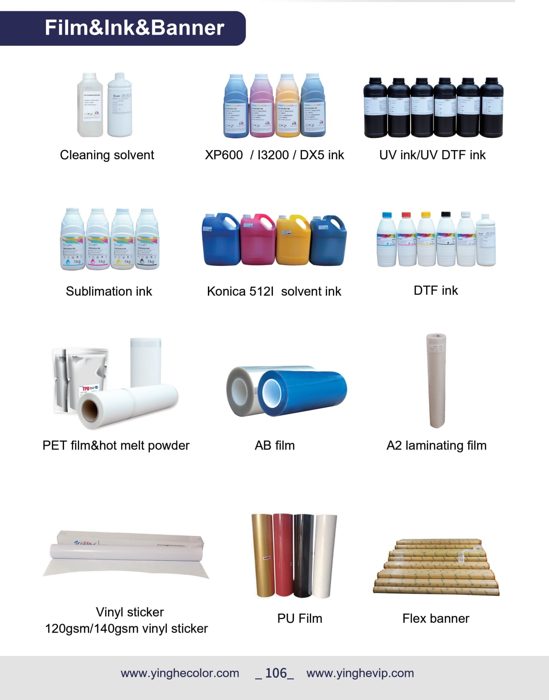
SEAFAR lists PET film & hot melt powder, with specifications and prices confirmed on WhatsApp. Its film, ink and banner catalogue also includes DTF ink. Confirm compatible materials and their quoted quantities before calculating consumption costs.
Use purchasing units consistently. If you buy film by the roll but estimate jobs by printed area, convert both to a common basis. Include unusable spaces and test output rather than assuming every part of the roll becomes a saleable transfer.
Track routine cleaning materials separately from ink deposited in the artwork. Both affect the business, but combining them without records can hide why costs change.
Build quotations around the work involved
A quotation should define what the customer receives, not merely state a price per shirt.
Make the scope clear
Specify the approved design, print size, placement, garment responsibility and delivery arrangement. Explain how artwork changes or added print positions will be quoted before work proceeds.
For customer-supplied garments, agree how testing and potential spoilage will be handled. Do not assume an unfamiliar fabric will behave like a previously tested garment.
Consider separate charges for artwork preparation or complex handling where appropriate. Small orders still require approval, setup and administration, so garment quantity alone is not a reliable pricing guide.
Test break-even against realistic orders
For a consistent job type, use:
Break-even order count = monthly fixed operating costs ÷ average contribution per order.
This only works when contribution is positive and the average reflects your actual order mix. If jobs vary widely, assess transfer-only work and finished garments separately before combining the results.
Prepare quieter and busier workload scenarios using your own enquiries and completed orders. Check whether production can handle the required work, including maintenance, approvals and finishing—not just printing time.
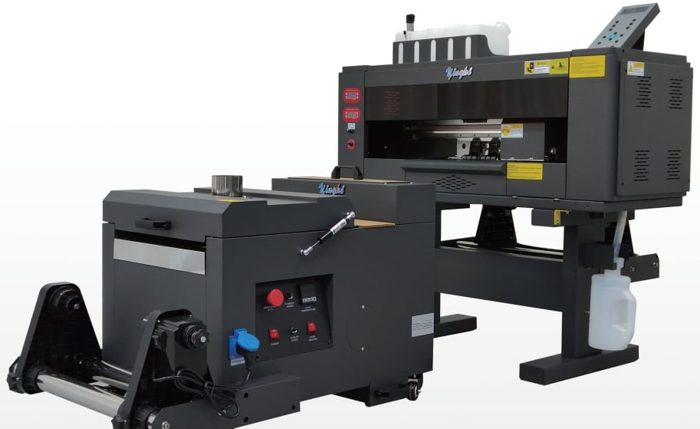
Equipment prices provide a starting reference, not proof of profitability. The YH-A3 DTF printer + powder shaking machine is listed at KES 470,250 with Epson XP600 x2. The Yinghe 38 × 38cm Flatbed Heat Press Machine, designed for DTF transfers among other applications, is listed at KES 29,999. Assess their costs against realistic demand rather than assuming immediate full utilisation.
Review margins and cash separately
After each order, compare quoted and actual material use, labour time, rejected output and contribution. Investigate repeated differences before accepting similar work at the same price.
Also track customer payments and supplier payments. An order can show a margin while leaving cash tied up in unpaid invoices or unused materials.
Printing Business Setup & Production Planning can help you plan around what customers buy. Production Workflow & Technical Consulting provides advice on achieving more consistent output from existing equipment and materials.
Next steps
Bring your typical designs, order quantities and costing questions to SEAFAR International. WhatsApp +254 795 463 928 or email ENQUIRIES@SINTL.CO.KE to confirm prices and discuss equipment, consumables or production planning.