dtf powder kenya: What to Check Before You Buy
Buying DTF powder? Check compatibility, pack details, handling instructions and transfer performance before choosing supplies for your Kenyan print shop.
Searching for dtf powder kenya is a useful starting point, but choosing the right consumable takes more than comparing pack prices. For garment printers in Kenya and East Africa, the important question is whether the powder works with the film, ink, fabric and equipment already in use. A clear purchase enquiry should establish compatibility, handling requirements and what the quoted pack contains.
What DTF powder does in garment printing
In garment DTF printing, hot-melt powder provides the adhesive layer that helps bond the printed design to the fabric during heat transfer. It is applied to the wet printed ink on the film, with excess powder removed before curing according to the material instructions.
Powder is therefore part of a system, not an isolated purchase. Uneven application, unsuitable curing conditions or incorrect pressing can affect the finished transfer. Buying a different powder will not necessarily resolve a problem caused elsewhere in the workflow.
SEAFAR International lists PET film & hot melt powder in its consumables catalogue. Specifications and prices are confirmed on WhatsApp; the listing alone does not establish pack size, powder grade or processing settings.
dtf powder kenya: Your buying checklist
Confirm the intended application
Tell the supplier that you need powder for garment DTF transfers. Do not assume that products described broadly as transfer adhesives or UV DTF consumables are interchangeable with garment DTF powder.
Include the fabrics you intend to print. A transfer that looks acceptable on one garment may behave differently on another, particularly where fabric construction, stretch or heat sensitivity differs.
Before placing an order, ask:
- Is this powder suitable for my garment DTF film and ink combination?
- Which fabric applications is it recommended for?
- What curing and heat-transfer instructions accompany it?
- Are there application limitations I should know about?
- Is a technical data sheet and safety data sheet available?
Treat unanswered compatibility questions as matters to resolve before committing to a production order.
Establish exactly what the quote covers
The catalogue name “PET film & hot melt powder” should not be treated as confirmation that every quote includes both materials. Ask for an itemised description identifying the powder and any film quoted separately.
Request the net pack weight, packaging format and product identification. If comparing suppliers, compare the same quantity and application rather than simply choosing the lowest total price.
Also ask whether delivery is included or quoted separately. For orders outside Nairobi or elsewhere in East Africa, provide your destination when requesting the quote rather than assuming delivery terms.
Match the powder to your application method
Explain whether your shop applies powder manually or uses a powder-shaking machine. Ask whether the proposed powder suits that method and what equipment adjustments may be required.
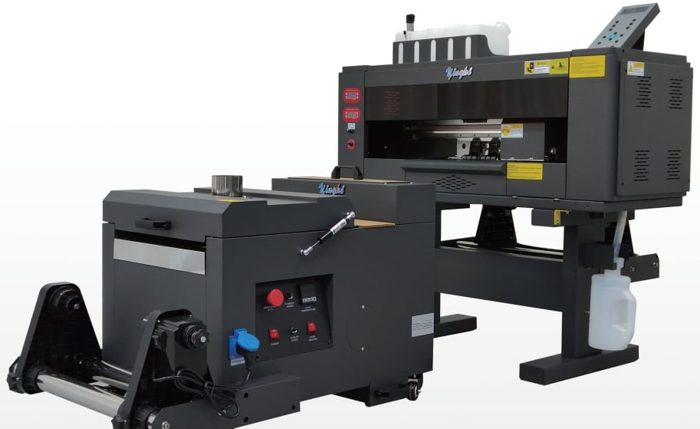
The catalogue includes the YH-A3 DTF printer + powder shaking machine, listed with two Epson XP600 printheads. However, owning a particular printer does not by itself confirm powder compatibility: the film, ink and curing stage still need checking.
Avoid selecting curing settings from a generic online recommendation. Use the material and equipment instructions, then validate the result on your actual production setup.
Assess a trial before a larger purchase
Ask whether a small trial quantity can be purchased before committing to a larger order. Use representative artwork and the garment types your customers actually request.
Keep the film, ink and artwork consistent while assessing the powder. Record curing and pressing settings so you can distinguish a material issue from a process change.
Check the finished transfer for:
- Even adhesion across the design and around its edges.
- Unwanted powder residue outside the printed area.
- Fine-detail clarity and the feel of the printed surface.
- Performance when the garment is flexed as it would be during use.
- Appearance and adhesion after washing according to the applicable care instructions.
An attractive freshly pressed sample is only one part of the assessment. Do not infer long-term durability from appearance alone.
Check handling requirements before ordering quantity
Ask for storage guidance and shelf-life information rather than assuming all powders have identical requirements. Keep containers closed as instructed, protect material from contamination and retain its identification label.
Follow the safety data sheet for ventilation, handling and protective equipment. Avoid creating airborne dust, and keep powder handling away from exposed printer components.
If application remains inconsistent, SEAFAR’s Production Workflow & Technical Consulting offers advice on getting more consistent output from your equipment and materials.
Next steps
For DTF powder enquiries, WhatsApp +254 795 463 928 or email ENQUIRIES@SINTL.CO.KE. Share your film, ink, garment types, powder application method and required quantity. Ask for confirmed specifications and a clear quote before ordering.